
Santa Cruz County Parole vs Probation
Parole and probation are often used as if they mean the same thing. In Santa Cruz County release research, the difference matters. Parole is tied to CDCR prison custody and state supervision through the Division of Adult Parole Operations. Probation is a local court order handled through the Santa Cruz County Probation Department. A person can leave Santa Cruz Main Jail, Blaine Street, Rountree, or the Rehabilitation and Reentry Facility and still have probation terms, pretrial monitoring, or a court date.
| Status | Who Supervises It | Best Verification Path |
|---|---|---|
| State parole | CDCR Division of Adult Parole Operations | Check CIRIS, DAPO contact pages, and any BPH hearing result. |
| County probation | Santa Cruz County Probation Department | Use the court case, probation department, and release record. |
| Pretrial services | Probation Department Pretrial Services Program | Confirm through court orders and pretrial monitoring terms. |
| Work Release or CAP | Sheriff's Corrections Bureau | Check court orders, CAP records, and the jail booking record. |
- Parole
- State supervision after a CDCR prison release or other state parole placement.
- Probation
- Local court-ordered supervision that may follow a jail sentence or replace further custody.
- Pretrial monitoring
- Community monitoring before a case is resolved, ordered so the person can remain out of custody while the case proceeds.
- Absconder
- A supervision term used when a person has stopped reporting or cannot be located by the supervising authority.
Verify Santa Cruz County Supervision
The practical question is whether a released Santa Cruz County person is on parole, probation, pretrial monitoring, a custody alternative, or none of those public statuses. Start with the custody source that matches the last known detention event. A county jail release points first to the Sheriff's Web Jail Viewer and court record. A prison release points to CDCR's CIRIS offender search and DAPO. A local court sentence may point to probation, Work Release, electronic monitoring, or a later warrant.
- Search the Santa Cruz County jail booking record from Santa Cruz County released inmates to confirm the local release, scheduled release, booking number, and court case number.
- Search the Santa Cruz Superior Court case by party name or case number to read disposition, sentence, probation terms, hearings, or pending court dates.
- If the person was committed to state prison, use CIRIS and CDCR parole resources instead of treating the county jail as the release-date authority.
- For county probation or pretrial monitoring, use the Probation Department and the court order. CDCR does not verify county probation status.
- Check the Santa Cruz County warrant search when a failure to appear, probation violation, or other post-release warrant is suspected.
VINE can help with custody-change notifications, but it is not the permanent supervision record. If a VINE alert says a person was released, confirm the legal reason through the jail booking, court case, probation order, or CDCR record.
Santa Cruz County Supervision Agencies
CDCR says DAPO supervises people subject to state supervised parole and people in some alternative custody programs. DAPO is organized into Northern and Southern regions and has many field parole units statewide. Santa Cruz County does not have a separate county-run parole agency. If a released person came from state prison, use CDCR status first, then the DAPO Northern Region directory or regional units and headquarters page for the correct office path.
The county side is different. Santa Cruz County Probation describes itself as an arm of the court, with Pretrial, Adult, Juvenile, and Institutions divisions. Its Pretrial Services Program monitors people whom the court allows to remain in the community while safeguarding court appearance and public safety needs. Adult Probation supervises local probation terms and prepares pre-sentence investigations. These local statuses can explain why someone is no longer in jail but still has court-ordered duties.
Supervision contact. Santa Cruz County Probation Department handles local probation and pretrial matters. CDCR DAPO handles state parole. Use the court case to decide which agency fits the release.
Santa Cruz County Probation Department
Pretrial, Adult, Juvenile, and Institutions divisions
Probation Department information
CDCR Division of Adult Parole Operations
State parole supervision and regional parole units
CDCR parole operations
Santa Cruz County Custody Alternatives
Santa Cruz has a local custody-alternative and reentry landscape that can change how a release looks. The Sheriff's Work Release / Custody Alternative Program lists Work Release, Electronic Monitoring, and Out-of-Custody Booking. Work Release lets qualified convicted low-level offenders serve a sentence through community-based service work assignments. Electronic monitoring places selected clients under house-arrest conditions with an ankle device and approved movement schedule.
This status is release-adjacent, but it is not CDCR parole. A person may be out of a jail unit while still serving a local sentence through CAP or electronic monitoring. The Web Jail Viewer may not read like a simple jail release in that case. Confirmation usually comes from the court order, CAP office, and Sheriff's records request. The Probation Department also reports Probation Success Centers in Santa Cruz and Watsonville and a planned Mobile Success Center, which adds local reentry support to the supervision picture.
| Local Track | Release Meaning |
|---|---|
| Work Release | Sentence service through community work instead of a jail unit. |
| Electronic monitoring | House-arrest style supervision with approved movement rules. |
| Out-of-custody booking | Booking process completed without a typical jail stay. |
Santa Cruz County Supervision Warrants
A warrant check is separate from a custody search. The Santa Cruz County arrest-warrant search says most warrants issued by the Santa Cruz County Superior Court are online, that the database updates continuously, and that recent changes may not yet appear. It also warns users not to attempt an arrest based on warrant information. That warning should be taken literally.
For parole and probation research, a warrant can signal a new legal issue after release, a failure to appear, or a possible supervision violation. It does not prove the person is in jail. Match the warrant result to the court case, then check the Web Jail Viewer or VINE if the question is current custody. If the warrant relates to state parole, CDCR or DAPO may also need to be checked.
Note: A warrant result is a legal-status clue, not a full supervision file or a release record.
Santa Cruz County Parole Hearings
Some Santa Cruz County cases move from local court to CDCR and then to the California Board of Parole Hearings. BPH hearing schedules and results are state-prison sources, not Santa Cruz County jail release lists. The BPH hearing schedule says schedules are updated weekly on Thursday morning and list monthly calendars with hearing date, time, location, and whether the hearing is in person or by videoconference.
The BPH results page publishes recent proceedings by week and month. Result labels need care. Grant means the person was found suitable and recommended for parole, but final review may still follow. Deny, Continue, Cancelled, Split, Postpone, Waive, and Stip each have distinct meanings. None should be reduced to a simple released-or-not-released answer without checking the full CDCR and BPH context.
The CDCR parole operations page shows the state parole source, while the BPH results source shows how parole-suitability outcomes are published. Both are state sources, so use them only when a Santa Cruz-related person was committed to CDCR or has a BPH parole-eligible date.
CDCR's parole page is the state source for DAPO supervision.
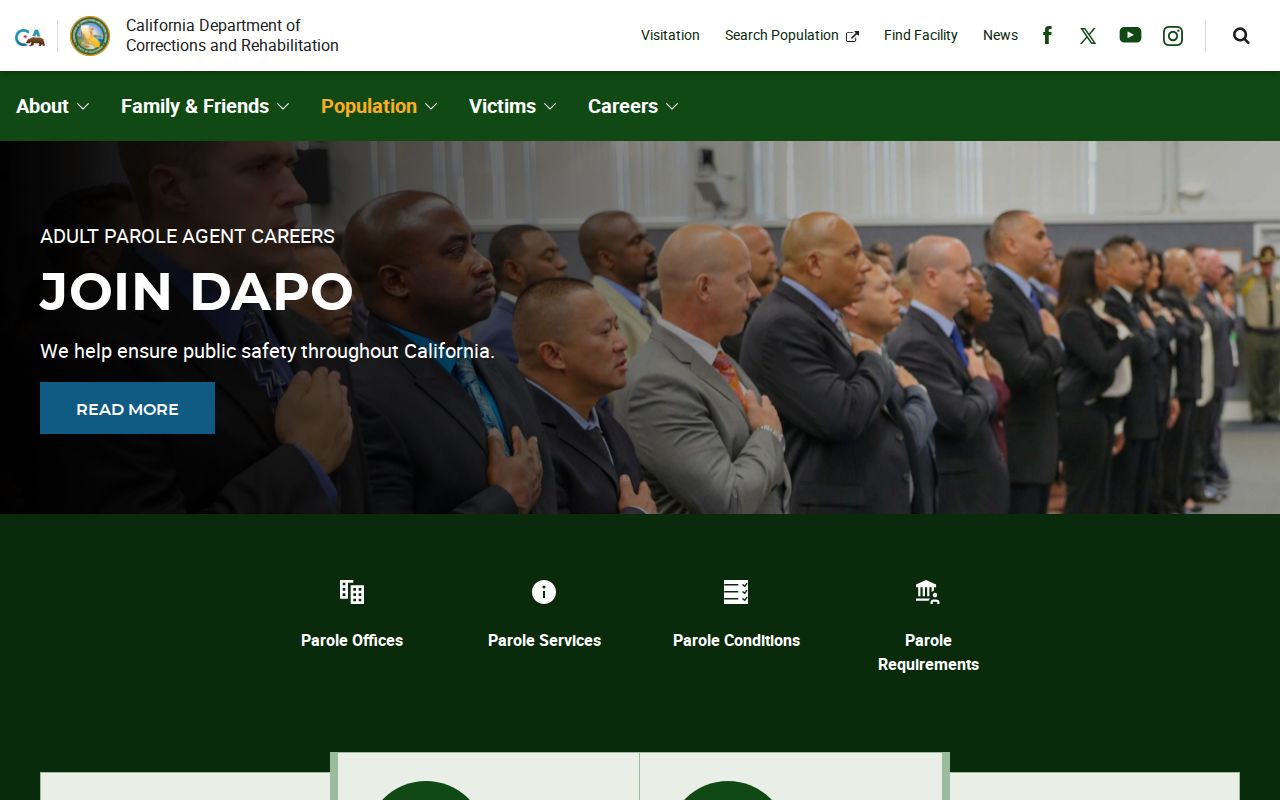
The screenshot supports the state-parole distinction: CDCR parole is the correct channel for state prison release supervision, while county probation remains local.
Santa Cruz Release Property Issues
Santa Cruz release research also has a practical property trail. The Santa Cruz Main Jail page says property release to another person while someone is in custody is reviewed case by case, limited to necessary items, and requires a signed Property Release Form. That is not a parole or probation decision, but it helps explain why a person may have follow-up contact with the jail after release.
The Corrections FAQ also describes a replacement-check route. A person who lost a check can contact Jail Reception for a Replacement Check Request Form. These details belong with supervision research because leaving custody does not always end every jail-related task. For legal status, use probation, DAPO, court, and warrant channels. For property or check issues, use the jail's correctional contact path.
Ending Santa Cruz County Supervision
Supervision ends through the authority that created it. County probation can end by court order, expiration, termination, violation proceedings, or other court action. Pretrial monitoring ends when the court changes or closes the pretrial release order. CDCR parole can end by discharge from state supervision, but the public proof may require CDCR material, a parole discharge record, or a court-related document depending on the question.
California public-record law can support release and custody-status requests, but it does not make every supervision document public. Government Code section 7923.610 covers specified arrest information, including time and manner of release and parole or probation holds, subject to safety and investigation limits. If online sources do not resolve the status, request a narrow record tied to the person, booking, case, and specific release or supervision question.
Public Record Search
Sponsored Results